
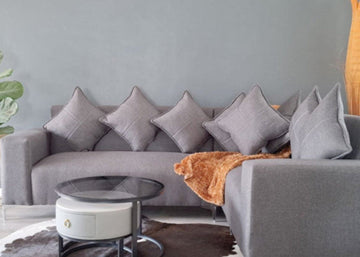

Staring at a bare wall and wondering whether to hang a mirror or a piece of art is one of the most common interior design dilemmas. It seems like a simple decision, but it can shape how an entire room feels: brighter and more open, or warmer and more expressive.
The truth is, mirrors and wall art aren't competing for the same job. Mirrors work with light and space. Wall art works with colour and story. Knowing which one your room needs first comes down to three things: how much natural light the space gets, how big or small it feels, and what kind of atmosphere you're after.
What does a mirror actually do for a room?
A mirror's biggest strength is what it does with light. Positioned opposite a window, a mirror catches daylight and throws it back across the room, which makes a real difference in spaces with limited natural light or a north-facing aspect.

Mirrors also create the illusion of depth. A reflection that includes an open doorway, a long sightline, or a view outside reads as extended space, which is why mirrors are so often recommended for small living rooms, narrow hallways, and compact bedrooms.
Beyond the practical benefits, mirrors offer:
- Daily functionality: a last check before heading out the door
- Visual expansion: narrow or dark rooms feel more open
- Design flexibility: an arched, oversized, or slim-framed mirror can act as a striking focal point in its own right, above a fireplace, sofa, or console table
One caveat worth remembering: a mirror doesn't create space; it duplicates whatever is in front of it. Point it at a blank wall or a cluttered corner, and it reflects that instead of adding anything useful. The placement matters as much as the mirror itself.
What does wall art bring that a mirror can't?
Where a mirror reflects, art expresses. It's the most direct way to introduce colour, texture, and personality into a room, and it's the only wall feature that can genuinely tell a story about the people who live there.
Art gives a room:
- Emotional warmth: textured prints, canvas art, and framed illustrations add richness that a reflective surface simply can't
- A colour anchor: a piece of art can set or reinforce a room's palette, tying together cushions, rugs, and smaller accents
- A true focal point: unlike a mirror, art doesn't rely on reflecting something else to be interesting; it terminates a room's sightline and gives the eye somewhere to rest
Art tends to be the better choice in rooms that already have plenty of natural light. South-facing rooms, open-plan spaces, and rooms with large windows don't need help brightening up; they need something to look at.
Which rooms suit mirrors, and which suit art?
Entryways
Mirrors handle the practical side here: a quick outfit check before you leave, plus a boost of light in what's often a dim, transitional space. Art, on the other hand, sets the tone for the whole home and creates a strong first impression for guests.
Hallways
Narrow hallways benefit more from mirrors, since the reflected depth makes tight corridors feel less closed in. Wider hallways can comfortably take a gallery wall of artwork instead, where there's enough room to step back and appreciate it.
Bedrooms
Art is generally the safer choice above the bed. According to Feng Shui principles, mirrors facing a bed are believed to disrupt rest by reflecting movement and energy back into the sleeping space. Beyond that belief, a mirror above a bed also reflects the ceiling, one of the least visually interesting parts of any room. Mirrors work better elsewhere in a bedroom, beside a dresser or opposite a window.
Dining rooms
A large mirror can amplify candlelight and pendant lighting, creating a formal, glamorous atmosphere for evening gatherings. Art creates intimacy and warmth instead, which suits everyday family meals better than a reflective surface.
Small spaces
Choose a mirror first, since light is usually the bigger constraint in a small room. Once that's addressed, art can be layered in for visual interest without making the space feel busier.
Can mirrors and wall art work together?
Yes, and in most well-styled rooms, they do. The strongest interiors don't force a choice between function and expression; they use mirrors for brightness and depth, and art for colour and focus, in the same space.

A few placement principles help this combination succeed:
- Give the mirror the position that catches the most light, typically opposite or perpendicular to a window
- Treat the artwork as the room's emotional anchor, positioned where it naturally draws the eye, above a sofa, sideboard, or bed
- Avoid competing focal points on the same wall; one element should clearly lead, with the other playing a supporting role
Gallery walls are a good example of this balance in action. Mixing a round mirror among framed prints adds depth and rhythm to an arrangement that would otherwise be flat.
What sizing and placement rules apply to both?
Getting the proportions right matters more than most people expect. A piece that's too small for its wall makes the whole space look emptier, not tidier.
- Sizing: aim for roughly two-thirds to three-quarters of the width of the furniture beneath it, whether that's a sofa, console table, or sideboard
- Hanging height: leave about 6 to 10 inches between the top of the furniture and the bottom of the frame, so the piece reads as connected to it rather than floating awkwardly above
- Eye level: for standalone pieces, centre at roughly 57 to 60 inches from the floor
What should you consider before buying either one?
Maintenance is worth factoring into the decision. Mirrors show fingerprints, dust, and smudges readily, so they need more frequent cleaning, especially in households with children or pets. Wall art generally needs only occasional dusting, though glass-fronted prints require similar upkeep to mirrors.
Budget-wise, both options are accessible at a range of price points; affordable canvas prints and simple framed mirrors can transform a wall without a large outlay, while larger statement pieces in either category command a higher price for the impact they deliver.
Let your room decide
There's no universal answer to whether a mirror or a piece of art is the better choice. The right decision depends on how much light your room gets, how big or small it feels, and what mood you're trying to create.
If your space feels dark, cramped, or flat, start with a mirror positioned to catch whatever light is available. If the room already feels bright and open but lacks character, let a piece of art do the talking. And if you're not in a rush to decide, remember that the best-designed rooms rarely settle for one or the other; they use both, placed thoughtfully, to balance function with personality.
Frequently asked questions
Does a mirror really make a small room look bigger?
Yes, but only when it reflects something worth reflecting. A mirror opposite a window or an open sightline adds both light and depth. A mirror facing a blank wall or cluttered corner doesn't create space; it simply duplicates whatever's already there.
Is it bad to hang a mirror above a bed?
According to Feng Shui principles, mirrors facing a bed are considered disruptive to rest, as they're believed to reflect energy and movement into the sleeping space. Many designers also avoid it for the practical reason that the reflection is usually just the ceiling. Art is generally the more popular choice above a bed.
What size mirror or artwork should I hang above furniture?
Aim for roughly two-thirds to three-quarters of the width of the furniture below it, whether that's a sideboard, console table, or sofa. Pieces that are too small make the surrounding wall look emptier rather than more finished.
How high should a mirror or piece of art be hung?
Centre the piece at eye level, typically around 57 to 60 inches from the floor. Above furniture, leave 6 to 10 inches between the top of the furniture and the bottom of the frame so the two read as a single grouping.
Can I put a mirror and artwork on the same wall?
Yes, provided one clearly takes the lead. Give the mirror the spot that catches the most light, and let the art act as a secondary accent; otherwise the wall ends up with two competing focal points.


